


Serving Midlands and Upstate, South Carolina
PHD in Customer Care
Professional • Honest • Dependable
1850+ Reviews
4.9 Rating
Serving Midlands and Upstate, South Carolina
Satisfaction Guaranteed • PHD in Customer Care
Crawl space and basement dehumidifiers sized for Midlands humidity. Vents and fans do not beat a South Carolina summer. A sealed space with a dedicated unit does.
A vapor barrier stops moisture rising out of the soil. It does nothing about the humid air already under the house, and in a Columbia summer that air sits above 60% for weeks at a time.
A crawl space dehumidifier removes what is left and holds the space below the level where fungal growth and wood decay accelerate. It is the part of the system that keeps working after installation day.
Years of Local Service
local & Family-Owned Since 1955
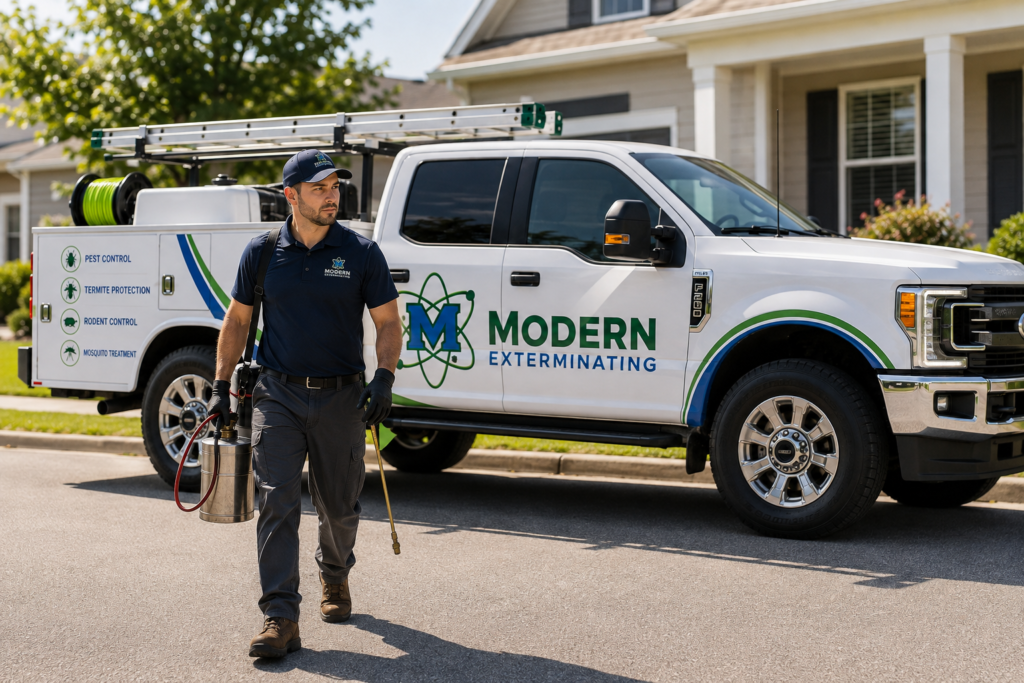
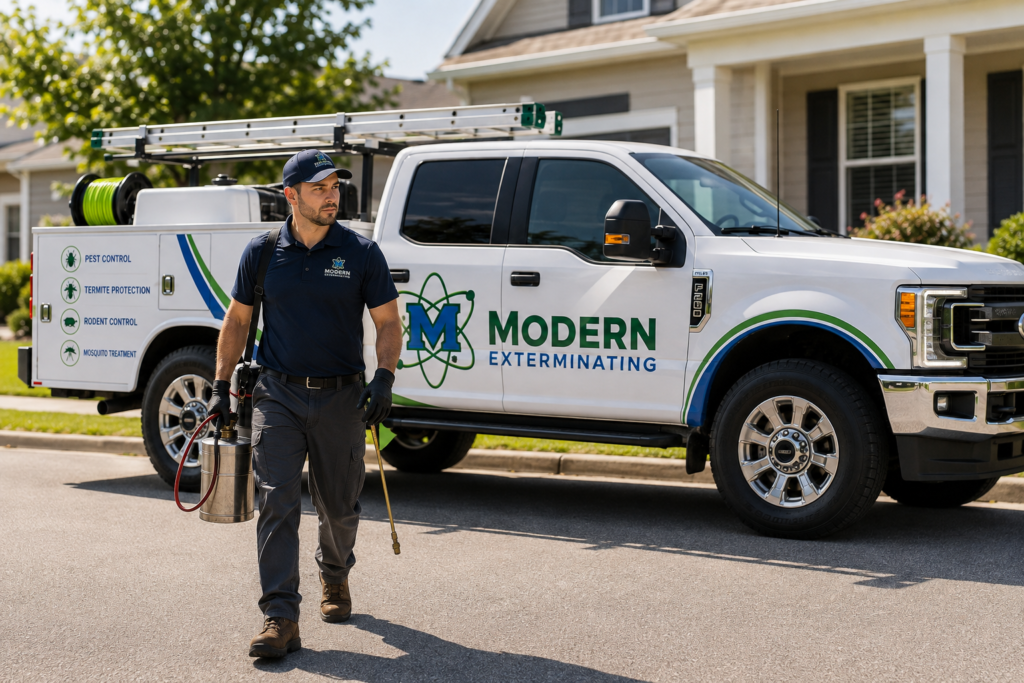
Modern Exterminating has been the longest-standing, local and family-owned pest control company serving the area since 1955. Now in its third generation, the company runs by a simple standard, a PHD in customer care: professional, honest, and dependable, on every visit.
Measure the space, size the unit to it, install with proper drainage inside a sealed envelope, then verify over the following weeks that the humidity actually holds.
We measure crawl space humidity, square footage and condition, and check whether the vapor barrier and vent sealing are doing their job first.
2
Unit capacity is matched to the volume and the moisture load. An undersized dehumidifier runs constantly and still loses ground in August.
3
Installation includes condensate drainage and a sealed crawl space envelope, because a unit fighting open vents is a unit fighting the whole outdoors.
4
We check the unit, filter and drain line during regular service visits and confirm the humidity reading is still where it should be.
Modern stands behind its pest control work. If a problem comes back within a reasonable time after service, contact our team and we’ll help address it according to the service plan.
Quick answers on the humidity number to aim for, what a crawl space unit does for the rooms above, and what one costs to run.
Below 60% is the working target. That is the point where mold and fungal growth accelerate, and wood decay follows the same curve.

Yes. Most of the air in your house passed through the crawl space first, so drying that space improves the air and the smell in the rooms above.
A hardware store unit is built for a bedroom, not a sealed crawl space. Crawl units run continuously and drain without anyone emptying a tank.

A correctly sized unit in a sealed space cycles instead of running flat out, and dry air cools more easily, so cooling bills often fall.
South Carolina’s subtropical summer keeps outdoor humidity high for months, and an open crawl space vent pulls that air directly under your floor. It condenses on joists, ductwork and insulation, which is how a crawl space with no standing water still rots.
A dehumidifier is not a standalone fix. It works as part of a sealed system: vapor barrier on the ground, vents closed and screened, drainage handled, then a unit sized to hold the result.
A vapor barrier on its own leaves these behind, and they are the usual reason a homeowner calls us back a year later.
If several of these are present, the inspection almost always shows humidity well above the 60% line. Installed from our Columbia, Lexington and Lugoff-Elgin branches.
Often yes. The barrier blocks moisture coming out of the soil, but it does not remove the humid air already in the space or the air pulled in through vents. In most Midlands crawl spaces the two work together rather than as alternatives.
Filter checks and a clear condensate drain, mainly. We handle both during regular service visits and confirm the humidity reading at the same time, so nothing depends on you crawling under the house.
Appointment length depends on the treatment and property. Our team will explain what to expect, provide an arrival window, and call on the way.
Modern uses low-toxicity, professional products and follows service-specific safety requirements. Some treatments require people or pets to stay out of treated areas until the materials are dry or for a specified period.